Why Your Habit Streak Breaks After 3 Days (And How to Make It Stick)
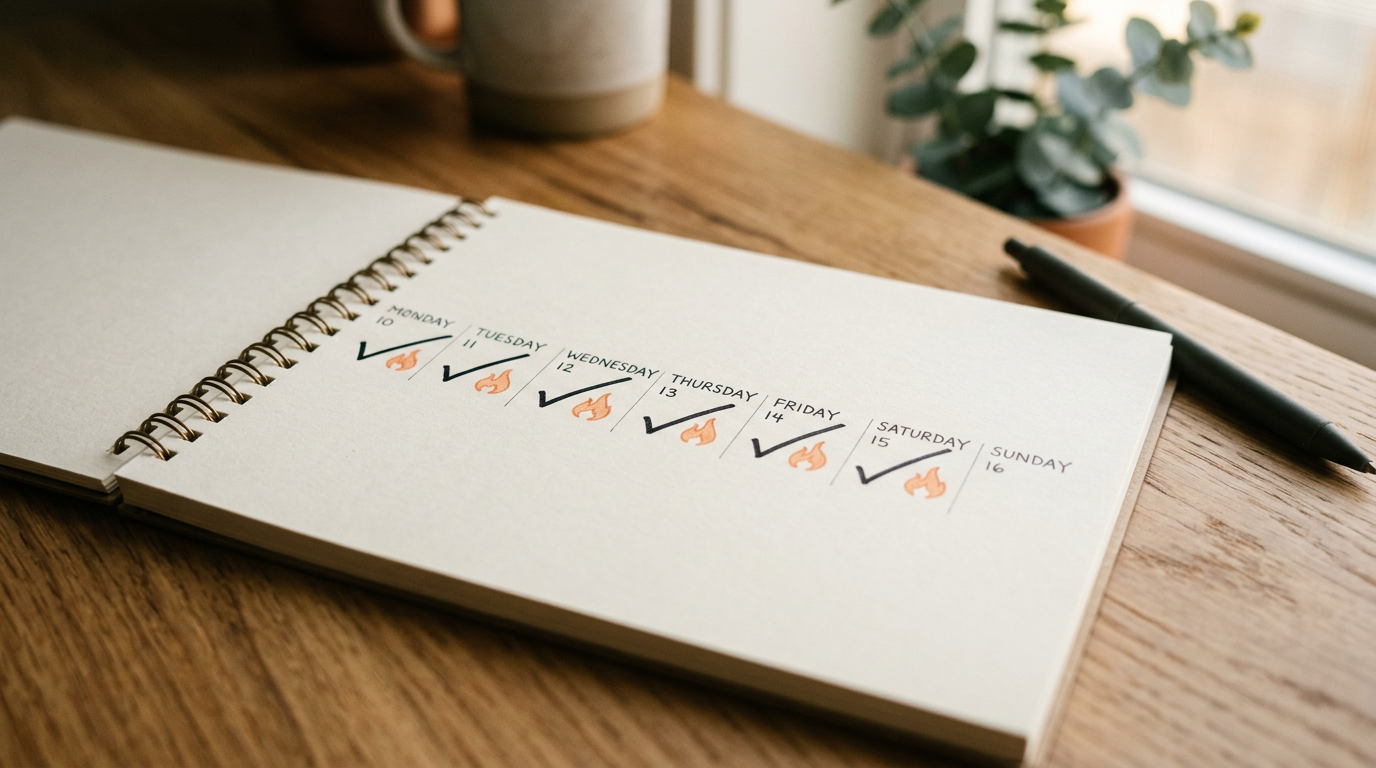
You're on day three. You've meditated, exercised, or written every day. Then something blows up—a sick kid, a late night, a bad mood—and you miss one day. By day four, the streak is gone and so is the motivation. Sound familiar?
It's not a discipline problem. Streaks break because we never planned for the days when we can't do the "full" habit. We go all-in, and the first slip feels like a reset. So we reset.
The All-or-Nothing Trap
Most of us define a habit in one way: "I meditate for 10 minutes" or "I run 3 miles." On a tough day, that bar is too high. We tell ourselves we'll do it later, we don't, and the streak dies.
The fix isn't trying harder. It's defining a minimum—a version of the habit so small that "I don't have time" or "I'm too tired" is never a good excuse.
• Meditation: Full habit = 10 minutes. Minimum = 3 breaths with eyes closed.
• Exercise: Full habit = 30 min workout. Minimum = 10 squats or a 5-minute stretch.
• Writing: Full habit = 500 words. Minimum = 1 sentence.
On a bad day, you do the minimum. The streak stays alive. Your brain keeps logging "I'm someone who does this."
Why the Minimum Matters More Than the Number
A streak isn't valuable because of the number. It's valuable because it protects your identity. Every day you show up—even with the minimum—you reinforce "I'm a person who meditates" or "I'm a person who moves." Miss a day and that story gets weaker.
The minimum isn't cheating. It's the rule that makes the streak possible on the days when life gets in the way. Once you have it, you're not choosing between "do everything or quit." You're choosing between "do the minimum or quit." The minimum wins a lot more often.
How to Make Your Streak Stick
- Name your minimum now. Before you need it, decide what "counts" on a terrible day. Write it down.
- Use a tracker. Seeing the streak creates accountability. The act of marking "done" (even for the minimum) gives you a small reward and keeps the habit salient.
- Don't negotiate day-of. On a bad day, don't ask "Can I skip today?" Ask "What's my minimum?" and do that. No debate.
HabitGlue is a habit tracker built for streaks and identity—with before/after primers and flexible goals so you can log your minimum and keep moving.